Saturday, March 30, 2013

1,825 Days


The title of this post,  1,825  Days, refers to how many times the sun has come up since I had a heart attack out of the blue five years ago. In those early weeks after, I remember being afraid to go to sleep at night, for fear I wouldn't wake up. I thought it might be good to remind myself of where I've been and where I am now. Here goes.

Day 1: March 30, 2009. rushed to ER w/ classic heart attack symptoms, discovered the next day to have been caused by a spontaneous coronary artery dissection (SCAD). Six stents later plus a week in the hospital, sent home and told they're rare, nothing prevents or causes them, no way to know if I'll have another one.

My wonderful husband, Paul, live-blogged my heart attack and subsequent week in the hospital. I started blogging my experience, first in a private journal, then I created this public blog.

Day 14: April 13, 2009. found some SCAD survivors in an online community called WomenHeart, hosted on Inspire.com's site. Joined Inspire, started talking with other survivors.

Day 36: May, 2009. Started cardiac rehab.

Day 76, June, 2009. Not even three months after heart attack, volunteered at my first health fair. Health fair was hosted at the gym where I did my rehab and a local WomenHeart Champion (volunteer), Carol, had a table. She and I struck up a conversation.

The other lady who was supposed to have been staffing the table with her had a family emergency and couldn't make it, so at Carol's invitation, I sat down and started talking with the women who walked by. Carol encouraged me to apply to WomenHeart's Science & Leadership Symposium, which is in October every year at Mayo Clinic in Rochester, MN. I did so, and was accepted.


That discussion thread put a large number of the SCAD survivors on the messageboard all together in a single message thread.


Day 194: October 9, 2009. Attended WomenHeart Science & Leadership Symposium at Mayo Clinic in Rochester, MN. After we complete the training, which we don't pay for, we are requested to pay it back in the form of at least 24 hours of community service over the course of the next year.

I came home and started assisting other local Champions with area support groups. I also made a Yahoogroup for the Class of 2009 WomenHeart Champions. Before Facebook got so popular, we used this email list to keep in touch with each other, share news, ask advice, that sort of thing.
                   
Day 243: November, 2009. Dr. Hayes contacted the SCAD survivor who approached her the previous month at the Symposium and agreed to do a small SCAD study. I was asked to help reach out to the women on the WomenHeart messageboard on Inspire. We split the list of known SCAD patients, with me contacting the idiopathic/no known cause ones, and the other person contacting the post-partum ones.

As well as encouraging other women to apply to the study, I had to round up my own records and send them in.

Eventually I was put in charge of the Chapel Hill WomenHeart support network, providing in-person support and education for women with heart disease.

I hosted monthly meetings and attended local health fairs of all sizes, from events in small neighborhood churches all the way up to the NC Governor's Conference on Women, at the Charlotte Convention Center.


Day 365: March 30, 2010. My first heart attack and SCAD anniversary. I'd been warned by other women that the one-year anniversary can be rough, so even though my husband was out of town visiting his gravely ill mother, I invited a couple of close friends over to mark the day with me. I went from laughing and thrilled to be alive one minute, to crying the next; it was quite the roller coaster.

Day 458: Oct. 10, 2010. Competed in, and finished, the Ramblin' Rose Triathlon, the one I'd started training for in 2009 when I got derailed by my heart attack and SCAD.

Day 553: Feb. 2, 2011. Fellow SCAD survivor Stacey created a website for SCAD. As far as I know, this was the first survivor-created website to focus solely on SCAD.


Dr. Hayes eventually received 50 percent more study participants than she had slots for. We didn't hear anything for a long time, then got news that the results of the pilot study would be coming out in the September 2011 issue of the journal Mayo Clinic Proceedings.

Day 869: August 17, 2011. Mayo Clinic announced two new SCAD studies, thanks to the results of the initial pilot study.

Ron Winslow, longtime health reporter for the Wall Street Journal, interviewed several of us, and the story came out over Labor Day weekend. It's called When Patients Band Together: Using Social Networks to Spur Research for Rare Diseases; Mayo Clinic Signs On.


Some of us had been hoping to get a separate SCAD area on the Inspire site, as it seemed like a lot of the SCAD messages tended to get lost in among the regular women's heart disease discussions. That process was taking a long time, and it wasn't certain that it would ever happen.

Day 871: Aug. 19, 2011. I traveled to Charlottesville, VA to be interviewed for Mayo Clinic's Medical Edge series.

Day 899: September 27, 2011. I started a Facebook group for SCAD survivors.
 
I originally intended it to just be a stopgap while things got going on the Inspire site. At first there were only 4-5 of us and I was the sole admin. Slowly, the FB group took on a life of its own, and now boasts over 500 members.

Day 917 (approx.): Mid-Oct., 2011. Inspire, the site that hosts the WomenHeart community where a lot of the SCAD survivors first found each other, put together a PDF report called "SCAD Ladies Stand Up: Stories of Patient Empowerment." 

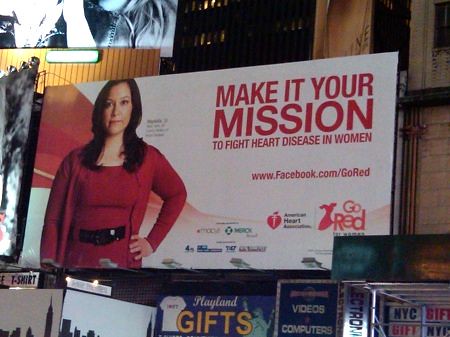
Day 923: Oct., 2011: While at the week-long social media summit, I got notification that I was a co-recipient of the 2012 Woman's Day Red Dress Award, honoring people who are making a big difference in the fight against heart disease in women. 


Day 965: Nov. 30, 2011. Co-hosted WomenHeart's first patient-run webinar on a scientific topic (SCAD, of course). No link because the webinar is for WH Champions only.


Day 1,084: March 19, 2012. Inspire partnered with Stanford Medical School to do a blog called "Scope," and I was invited to write the first post for it, called "Dr. Google: Threat or Menace?

Day 1,095: March 30, 2012. My third heart attack and SCAD anniversary was a low-key event with just my husband and me having a nice meal out. My thoughts on the day were on how far we still have to go in raising awareness of heart disease in women.

Day 1,131: May, 2012. Thanks to the efforts of new nonprofit SCAD Research, Inc., founded by a gentleman named Bob, whose wife died from a SCAD in late 2010, and three Chicago-area SCAD survivors (Meghan, Cheryl and Deb), the first-ever SCAD Walk for Research, and SCAD survivors reunion, washeld in Naperville, IL. 

I almost didn't make it thanks to United canceling my flight, but 18 hours and three airports later, I staggered in around midnight. Cheryl and Deb had both kindly waited up for me and gave me my walk packet and goodies. Look at this awesome group of survivors.

At the walk and other events, including a lunch and learn featuring an update on the research presented by Dr. Hayes and Dr. Tweet, I felt a real connection to two particular ladies: Nancy and Ellen. Before my flights got so screwed up, Ellen was going to be picking me up from the airport, but that didn't work out.

After the walk, I realized that at the rate the FB page was growing, we needed more admins for it, and it would be helpful to have someone on the other side of the country as an admin who could approve requests while those of us on the East Coast had already gone to sleep. Thus, with their approval, I added Nancy (from MD) and Ellen (from CA) to the admin team for the FB group.

Day 1,240 (approx.): August, 2012. I became more and more stressed, and in late August made the decision to step away completely from all of my volunteer work. I left the SCAD FB group in the admins' capable hands, and turned my focus inward, to pay attention to my own health needs.

Day 1,444: March 13, 2013. Stanford and Inspire have compiled a year's worth of Scope columns in a report called "Experts by Experience: A Compilation of Patients' Stories."

Day 1,460: March 30, 2013. Anniversary number four featured neither tears nor celebrations, just reflection on the journey and wondering what the future holds. 

Day 1,825: March 30, 2013. Anniversary number five. Paul and I went out to one of our favorite restaurants, and I have been wearing the shirt that I bought myself as a present.

I could tell you that I hardly recognize that woman who came home from the hospital 1,818 days ago--shell-shocked, too scared to leave the house, keeping her cell phone by her side at all times, freaking out and crying about every little weird twinge of pain anywhere in the chest area... but that's not true.

She's still there inside the woman I am today, and I hear echoes of her in many new survivors' stories. I say to them what I say to myself: you are not defined by your disease. You are so much more. Be kind to yourself, find the support you need, and go out there and live.


Saturday, December 29, 2012

New Year

It's been a long time since I've made New Year's resolutions. I used to make all of the standard ones relating to diet, fitness, more time with family and friends.

After my heart attack, those resolutions still applied but with a degree of hyper-vigilance, lest so much as a grain of salt creep into my food, or a single extra pound show up on my hips. All that hyper-awareness ultimately added to my stress.

For 2013, I just have one goal: cherish myself and my imperfect heart. Everything else will flow from that.

Be good to yourselves, and for those like me who tend to point the harshest critiques inward -- if you wouldn't say it to your best friend, why would you say it to yourself?

Tuesday, July 10, 2012

Talking TB

Normally, my posts are all about the heart.


Today finds me blogging about the lungs again. Specifically, tuberculosis.


Unless you're living under a rock, by now you've heard about the TB outbreak in Florida that officials worked to keep under wraps, because it was only affecting, as they so quaintly put it, "the underclass." And in a case of worst timing ever, the governor has just closed the state's only tuberculosis hospital.


You know your problem has hit the big-time when the macros start showing up on Facebook, like so:


Tuberculosis kills. It's not like a cold, only worse. You have to follow a strict drug regimen for several months, sometimes a year or more, and sometimes, the drugs aren't enough.


My family has direct personal experience with this.


In the early 1950s, in her first year of nursing school, my mom had a positive TB titer. She was subsequently shipped off to the Mecklenburg County sanatorium. She also spent time at McCain, and at Black Mountain (link goes to handbook). 


In all, she was institutionalized for almost two years. Christmases, Thanksgivings, birthdays, all spent away from family and friends. Think about being 18-19 years old--even back then, even for a farm kid (they grow up fast), it was hard, never having been away from home and suddenly being cut off from your loved ones. You're on bed rest while they spend the next year or more going on with their lives, without you. A lot of the inmates had postcards like these made up:


Ultimately, she had to have a lung resection--that's where go in through your back and cut out the diseased part of your lung. In the mid 1950s, it was still a new and revolutionary treatment, and it couldn't have come a moment too soon for her.


I sent the link above for the Black Mountain sanatorium handbook to my parents and brother and sister. My mom emailed me back:


"I remember a lot of the rules, such as rest time 1 to 3pm, no reading, writing, or doing crafts, I got caught a few times... The picture made in the store had a young girl in the back of the picture that was there when I was, she was about 10 and had been there probably a year. She was everyone's pet because she was so young and had been there a while." [picture below]


She talked to Dick Gordon of The Story in 2007 and shared her experiences with him. It's a view of our past that not a lot of people remember--the days when you could be ordered into a sanatorium, and arrested if you didn't comply. 


Reading the rules for the sanatorium at Black Mountain is like taking a trip back in time. Smoking wasn't banned (surprising, for an institution specifically for people with TB), but drinking was an immediate cause for disciplinary action, and my mom knew of several people who were kicked out for drinking.


I asked her what happened to them then, because if they were under orders to be in a sanatorium for treatment, they were breaking the law by being kicked out. She told me that  some people moved from one treatment facility to another until they ran out of options. 


TB deaths in the US in the latter part of the 20th century had declined, to the point where a lot of sanatoriums were either closed or converted to other uses, but now cases are on the rise again. 


And in my opinion, pushing the problem under the rug like Florida did is not helping.
Another friend, who works in the pharma industry, says that no one is developing new antibiotics, and my mom's drug treatment--Isoniazid--is still a front line TB drug, even though it's been over 50 years now. Drug-resistant TB strains are cropping up, and no one is researching new treatments. 


It's a complex issue, and those rarely have simple solutions. We need to encourage innovation and development of new drugs, we need to not hide disease outbreaks, we need to remember the past so that we're not doomed to repeat it.


Sunday, July 8, 2012

When ads go wrong: No one deserves to die

I get what the Lung Cancer Alliance is trying to do, but when I'm innocently reading a story online about Roger Federer winning his seventh Wimbledon title, I don't expect to be hit with an ad telling me that I deserve to die.


At first, I didn't quite register what I'd read, so I had to go back to the story and look at it again. Yes, it really does say "Crazy old aunts deserve to die." WTF???


Clicking on the ad didn't provide much in the way of answers, either. I landed on this page:
http://www.noonedeservestodie.org/?utm_campaign=lca_display&utm_source=quadone&utm_medium=160x600&utm_content=ral_durham&utm_term=teaser&mpch=ads


which is a scrolling list of other people who also deserve to die. 


At no point is it clear that this is a statement that no one deserves lung cancer. We're supposed to infer this from the fact that it's the Lung Cancer Alliance's website, apparently. Again, I support the message that they're rather clumsily trying to get across. My mother-in-law never smoked a day in her life and she died from lung cancer; my best friend's dad was a two-pack-a-day man, and he died from lung cancer, too. Neither of them deserved it.


We in the heart disease community get this all the time. "Oh you have heart disease? Well no sympathy for YOU; you obviously brought it on yourself!" 


Which is no doubt one of the reasons why corporations fall all over themselves going pink for breast cancer awareness but wouldn't ever consider going red for heart disease awareness. Breast cancer is a tragedy; heart disease is just desserts for a decadent lifestyle, a flock of schadenfreude-laden pigeons coming home to roost.


After all, if eighty percent of heart disease is preventable, and you get it anyway, then clearly it's your own fault and you have no self-discipline or self-respect, you fat, lazy slob, you. Put down the doughnuts and go walk a mile or two, you fatty fatso.  It's so obvious, simple, and easy. You don't need help or sympathy or an awareness campaign; just eat less, exercise more--which is clearly working for a majority of us.


So yes, I'm firmly behind any campaign that attempts to erase the stigma of disease and that focuses on compassionate, supportive treatment, not finger-pointing. But what the Lung Cancer Alliance campaign is doing instead is a muddled, failed PR move that's alienating everyone--hipsters, cat people, crazy aunts, smug people, all people.


Bottom line: no one deserves to die.  


Edit: According to Lung Cancer Alliance President Laurie Fenton Ambrose, quoted in this New York Times piece, "Smoking 'is a risk factor' for lung cancer, Ms. Fenton Ambrose acknowledges, but so, too, is it a risk factor for heart attacks and strokes.
'But you’ve never heard anyone say, "You smoked, didn’t you?" to someone who’s had a heart attack or stroke.'" 
All I can say to that is, she must not know any heart attack or stroke survivors.

Wednesday, July 4, 2012

When worlds collide -- awareness

Today is July 4th, Independence Day here in the US. I told myself I wasn't going to spend the day online; my husband and I have a rare mid-week day off together, and plans to see fireworks this evening. But he's doing some volunteer work at the gallery where some of his photos are, and I'm hiding indoors from the 96-degree heat (plus humidity).

So I was looking at Facebook this afternoon when two different images came through my newsfeed and got me thinking.

In my professional life and my chosen hobbies, I'm a geek. An editor for a science fiction publisher. A gamer. A science fiction fan. A comics reader. An sf convention attendee, panelist and sometime organizer. For several years, I published a fanzine.

Geek culture: I'm soaking in it. See my post a couple of years ago about attending Dragon*Con, one of the biggest geek events on the East Cost, as a heart disease patient.

In 2009, I had something called a spontaneous coronary artery dissection, where the inner layer of the lining of my right coronary artery tore. The torn piece of arterial wall was sagging into the artery itself and blocking the flow of blood to my heart, which caused a heart attack.

Since 2009, most of my volunteer time and energy has gone toward raising awareness of heart disease, especially in women. I still attend several sf conventions every year, but especially in February--Heart Disease Awareness month--when I'm not at work, I'm usually doing something heart-related.

I've done a few things to bring heart disease awareness to geek culture. A friend of mine, Cherie Lambeth, and I have done a panel at some conventions on Being Fannish and Fit, on things like how to eat healthy on the road, how to put the game controller down and go play in the big blue room with the giant yellow light, working out while staying in a hotel, things like that. And I did a fanzine called A Change of Heart, which collected stories from my fellow fannish heart disease survivors.

Aside from those efforts, my heart disease activism and my geek life usually have very little overlap.

Today, though, they slammed together not once, but twice.

The first was this lolcat-esque macro:


When I first saw it, I had a moment of mental whiplash, thinking that heart disease awareness had somehow Vulcan mind-melded with Star Trek. In case you can't read it, the billboard says, "You deserve the redshirt treatment." In Star Trek, redshirts are expendable crewmen who get killed in large numbers, which is why it's funny that someone added Captain Kirk underneath saying "Do you want them all to die??"

Red is also the color of heart disease awareness, so when I see a health organization's billboard with red hearts on it, my first thought is that they're doing heart disease awareness, like so.

I've looked at the IH site and alas, their red shirts don't have anything to do with heart disease awareness, but it's a red heart on a health org's billboard, so my confusion is perhaps understandable.

The next example is less ambiguous:


Yes, a few months from now, some iconic Marvel characters will don pink for breast cancer awareness.

First, it should go without saying that I support everyone who's dealing with a cancer diagnosis. Cancer has taken its toll among my friends and family, and I think that breast cancer awareness in general is a good thing.

But really, when NFL players sport pink cleats, is there anyone on the planet who ISN'T aware of breast cancer?

Geeks are a very intelligent group; we don't need Thor or Captain America all pinked up to suddenly be more aware of breast cancer than we already are.

Given how dude-centric geek culture can be (examples here, here, and here), Marvel's probably going to take some grief for focusing on such a "girly" problem anyway, because clearly no women--or people who love them--ever read comics (which is a topic for another time and place).

My problem isn't with using geek cultural touchstones to get people's attention for breast cancer, though I wonder why Komen didn't try and get Lara Croft dressed in pink; I mean, everyone's looking at her boobs anyway--why not put something pink on 'em? Bonus for using Lara Croft--the other part of her anatomy that gets attention could be used to raise awareness for colon cancer...

My issue is that there's a huge disparity between what people perceive to be women's greatest health threat, versus what it actually is. Ask the average woman on the street what she thinks her biggest health threat is, and she'll most likely say "breast cancer."

And she'll be wrong. Over 435,000 women in the US die every year from heart disease. Around 40,000 die from breast cancer. Do the math; 10x as many women die from heart disease as from breast cancer.


We don't need Captain America to save the ta-tas. We need him to save our hearts.

Thursday, May 31, 2012

Guest Blog: Teri Thom, North Vancouver, BC, Canada

Today, I'm turning over my blog to a fellow SCAD sister, Teri Thom. She's the one who designed the lovely "SCAD Sisters" logo that I've shared before and which graces this post, as well.

Like so many other SCAD survivors, she's in excellent physical health and didn't have any of the traditional cardiac risk factors. This is her story, in her words.

My SCAD Story (Spontaneous Coronary Artery Dissection)
Teri Thom from North Vancouver, BC


June 16th 2010, evening
I had a heart attack, and didn't know it. I was deeply immersed in playing a video game (a 3D MMO) engaged in hard core combat :) It started with pain radiating up both of my arms and across my chest. I thought it was overtrained muscles from my previous day's workout along with some minor indigestion. I tried to self medicate with tylenol, antacid and massage - first mistake! My husband fell asleep at the normal time and I didn't want to bother him - second mistake! Finally after much pacing and massaging my arms and chest I fell asleep - third mistake!

June 17th in the morning
I got my husband out the door to work as usual. About an hour later when doing the dishes the pain and discomfort returned. This time I knew something wasn't right. I remember saying to myself, "This is BS!" - a second heart attack. I couldn't get my head around it being a heart attack even though it had crossed my mind. Intuition made me call my son and ask him to drive me to emergency – fourth mistake!

During all those mistakes my platelets were working to repair a tear in the lining of my Left Anterior Descending Coronary Artery. The lining and platelets were blocking the artery and preventing my heart from getting the oxygen it needed. I should have called an ambulance the evening of the 16th. That would have saved valuable time and got me immediate care. But we, typical nurturing, women, wives and mothers, are too busy taking care of others to know when we need help ourselves. It's ingrained in us! ^.^

How could I be having a heart attack, anyway? I had been a fitness buff most of my life, even a natural, amateur bodybuilding champion, still worked out at the gym, rode my bike for errands and power-walked regularly. I didn't eat red meat, smoke, or overindulge in treats or alcohol. I had no obvious risk factors. Besides, isn't a heart attack supposed to be super painful? Certainly bearing my two sons was much, much, much worse than this!!!

I was one of the lucky ones. In Surrey Memorial Hospital Emergency after a 3 hour wait, I received the tests and care to begin the repairing of the small damaged area of my heart. My husband and son came to find me relaxed with sunglasses on, under the bright hospital lights, listening to my iPod, completely cool and oblivious to the seriousness of my state. They laughed, commenting they would never forget that sight. The next morning I was sent to Vancouver General Hospital for an angiogram, which clearly showed the torn artery. Too small for surgery or stent, my condition was medically managed. I was told by my interventionist about the tear and by my cardiologist that I had had a narrow escape, that this condition was rare and usually only discovered at autopsy. Not much was known about it. Gee thanks! Ok... It must just be a fluke. Although I did work out pretty intensely the other day... Keep in mind I'm extremely competitive in the gym--or was.

With cardiac rehab and medication, in time, my life returned to a 'new normal.' No more extreme training. :( But I live! :) My heart is healthy again, no permanent damage, the artery repaired. But at cardiac rehab, like other SCAD survivors, I didn't fit in. I would do laps around the other, older, less fit participants. SCAD is blockage by tearing, not by plaque deposits, and our stories all have our complete and utter shock and surprise at having a heart attack. My arteries are pristine! Cholesterol levels are better than normal. We are more fit, younger, with healthy lifestyle choices, and many are athletic, marathon runners, cyclists and new mothers. Whenever I hear of a young person or new mother having a heart attack I wonder if it was a SCAD. And I'm filled with sadness for the many families who have lost loved ones to it without them or the doctors even knowing what happened.

I wanted to share my story to help increase awareness of this, until recently, most often fatal experience. We are in the hundreds now, having come together in online communities. Womenheart Champions have worked hard to inspire the Mayo Clinic do a research study on SCAD. On May 5th, the first annual SCAD walk was held in Naperville, Illinois.

Recent studies reveal contributing factors may include hormone spikes and irregularities, extreme effort, stress, trauma and FMD (Fibromuscular Displasia), a condition where there is abnormal growth of the lining of the arteries. Survivors should be screened for FMD in case they need to modify their lifestyle or take medication in order to prevent stroke or kidney problems.

Most importantly, call an ambulance if you experience any symptoms of heart attack or stroke. Do not wait! Your survival and recovery depend on it. Become familiar with what those symptoms may be as they are different for men and women. Heart attacks happen to healthy people, too.

Best, Teri Thom, North Vancouver, BC

Tuesday, May 29, 2012

One of these things is not like the other

Like most people who've had a heart attack, I have to take some pills every morning now.

I take Plavix, and I take a children's chewable 81-mg aspirin.

Note that that word "chewable" only refers to one of these:


Please also note the similar size, shape, and color between these two pills.

I submit for your consideration the fact that without my glasses, I am terribly nearsighted (with astigmatism, too).

Thus, I have a lesson to impart. Don't chew the Plavix.

Monday, May 21, 2012

Gathering together

There are words for groups of things: a murder of crows, a kindle of kittens.

What do you call a gathering of patients who've all experienced the same under-diagnosed heart condition?

I call it a MIRACLE, and it happened in Naperville, Illinois a couple of weeks ago--the first-ever SCAD Reunion and walk for SCAD Research, Inc.

Women and men who survive a spontaneous coronary artery dissection are often left feeling like freaks, because most doctors have never treated one.

To have 25 SCAD survivors all gathered together in one spot, at the same time, for a common purpose?

Another word: POWERFUL.


It's a tremendous experience, I dare call it life-changing--to be able to meet someone else who shares your diagnosis. I'm thrilled to be part of this SCAD patient collective.

Wednesday, April 4, 2012

Patient-Funded Research: First Annual SCAD Walk

In case the new big widget on the right side of the page wasn't a hint, just about one month from today, I'm participating in the First Annual Walk for SCAD Research, in Naperville, IL.

As my longtime readers know, Mayo Clinic has started research on spontaneous coronary artery dissections, and those of us who've had and survived a SCAD are motivated to help them keep that research going.

One brave family, the Alicos, has started a foundation, SCAD Research, Inc., in the wake of their loved one's death from a SCAD a little over a year ago. The SCAD Walk is their brainchild, and I'm happy to support it.

They've put together some info on some approximate research costs, so I've set my personal fundraising goal at $500, which is the average cost for the staff time for a detailed review and data abstraction of one SCAD patient's medical records.

Another SCAD survivor, Teri, designed this logo for us:


So that's what I'll be doing the first weekend in May. Lovely time for a walk.

Friday, March 30, 2012

An anniversary wish

Each year when the anniversary of my heart attack rolls around, I do something to mark the date.

That first anniversary, in 2010, was the most emotional. From listening to other women's experiences, I knew to expect something of an emotional roller coaster. Paul's mother was in the final stages of the cancer that took her life, and he was down in Florida spending as much time as possible with her. So I invited a very small group of friends to be with me to help me celebrate, and they stayed with me as I went from being thrilled to be alive one minute, to crying the next.

The second anniversary, in 2011, was more upbeat and was dinner out at my favorite restaurant with Paul and a few friends.

This year, the third anniversary, the word seems to be "introspective." I woke up around 4am and my brain was going, thinking in particular about a recent news item from the UK, where a woman had shown up at the A&E (their equivalent to our ER), had three abnormal EKGs, but was discharged with no treatment, and she died a few hours later. How many women have to die before our cardiac symptoms are taken seriously?

Every day, I'm grateful to the hospital staff who no doubt saved my life. The ER doc could have easily sent me home, with my normal EKG, no heart damage visible on the chest X-ray, and no elevated cardiac enzymes on the first round of blood work. My dissected artery would have continued to tear, and probably would have torn completely the next time I did any exercise. My friends and family could have been marking a very different anniversary today.

In October of 2009 I trained at the Mayo Clinic in Rochester, MN to be a volunteer women's heart health advocate, a WomenHeart Champion. Here in 2012, getting the word out is just as much of an uphill battle today as it was then. We need to get women as aware of heart disease as they are of breast cancer, and we need to get the medical community on board with accurate diganosis and treatment of women with heart disease.

On this third anniversary of my heart attack, this is my wish: that every woman talk to her healthcare provider about her heart disease risk, that every woman who seeks medical help for heart attack symptoms gets accurate diagnosis and effective treatment, and that no more women have to die because it couldn't possibly be their hearts.


Sunday, February 19, 2012

The two H's: Honored and Humbled

A few nights ago I, along with fellow SCAD patient and SCAD research instigator, Katherine Leon, was honored and humbled to be one of the 2012 Woman's Day Red Dress Award winners. It was a tremendous once in a lifetime experience, and I am so grateful to have been part of such a wonderful evening, surrounded by inspiring people all united in the fight against women's heart disease.

Several people have asked, so here's the text of my award acceptance:

This award doesn't belong to me.

It belongs to every woman who’s ever been told she's too young for heart problems.

It belongs to every woman who's ever been sent home from the emergency room and told that her crushing chest pain is just acid reflux.

It belongs to every woman who's ever been told that it's all in her head.

It belongs to every woman who's ever spent a sleepless night staring at the ceiling, wondering how she could possibly have had a heart attack at her age.

It belongs to every woman who's never met another person with the same diagnosis.

It belongs to everyone who’s ever been told, "There's nothing to research."

It belongs to all the women who are no longer here, because it couldn't possibly be their hearts.

On behalf of all of those people -- all of US -- thank you.

Thank you to WomenHeart, and to the WomenHeart Support Community on Inspire, which was a lifeline for me when I was newly home from the hospital, scared, with no one to talk to.

Thank you to Katherine Leon--none of this would have happened without her, and the years of work she's put in. I have been honored to share a small part of this journey with her, and I look forward to continuing to work together as we reach out to SCAD survivors across the globe.

Thank you to Dr. Sharonne Hayes, for saying "Yes." Thank you to Dr. Marysia Tweet for all the work on the SCAD study pilot and the two subsequent studies.

Thank you to John Novack of Inspire, for introducing me to the concepts of participatory medicine and the broader world of e-patient advocacy.

Thank you to my wonderful husband Paul, who's been with me on every step of this journey, starting out at the hospital in my Batman jammies--if I'd known I was going to be wearing them for a week, I might've dressed up a little...

Thank you to my family, here tonight, who provided tremendous love and support and didn't waver in the face of this rare, frightening experience.

Thank you to the wonderful community of SCAD survivors; fantastic women who reach out to each other from all corners of the world.

Thank you to my cardiologist, Dr. Cody Deen, who cares for the whole patient, not just my heart.

And thank you to Woman's Day, for taking on the tremendous task of raising the profile of women's heart disease. We're all in this together. Thank you all, and good night.

Sunday, January 29, 2012

A Zebra Among Horses

Almost three years ago, I had a heart attack at the age of 40, with no family history or elevated risk factors. I'm not diabetic, I don't smoke, my arteries aren't clogged, and at the time, I was training for a triathlon.

I was in shock to wake up one morning with textbook heart attack symptoms -- pain in the center of my chest that radiated down my left arm and up into my neck and jaw, I had cold sweats, I felt nauseated.

My husband drove us to the hospital, where they treated me as if I were having a heart attack--they gave me a nitro patch, an aspirin, drew blood, did a chest X-ray and an EKG--all the while telling me that it wasn't my heart, because I was too young and too female.

Round two of bloodwork proved them wrong, and a pole-axed doctor came to my room that night to tell me that even though he'd put the odds of me having had a heart attack at less than 1 in 100, I had indeed had a heart attack. A cardiac catheterization procedure the next day showed the cause: my right coronary artery had torn in a corkscrew pattern.

I'd experienced a rare thing called a spontaneous coronary artery dissection, or SCAD.

Only a few thousand SCADs happen in the US every year. Mortality rates are on the decline, thanks in part to better, faster treatment, but a SCAD can still be fatal.

Coronary arteries are constructed in three layers; a dissection is when part of the inner layer tears away, and the tear creates a sort of flap where blood gets diverted from where it should be going (to the heart).

It's like when the lining of your favorite coat tears, up near the shoulder, and you accidentally put your arm through the space between the torn lining and the outer layer of fabric, but since the sleeve and lining are still sewn together at the wrist, your arm can't actually come out where it should, at the end of the sleeve.

Your trapped arm is like the blood in a dissected artery that can't get to its destination.

My right coronary artery was repaired with six drug-eluting stents--the stents are pushing that torn inner layer back in place and are holding it in position, keeping the artery open.

After a week in the hospital, I was able to come home. I was referred for 12 weeks of cardiac rehab--a medically supervised exercise program. At first, I saw my cardiologist every six months. Now it's down to once a year.

I realize how extremely fortunate I am. If you and I ran into each other in public, unless you either noticed my medic alert bracelet or ran off with my wallet and saw my stent location cards, you'd never know that there's something wrong with me.

I don't look sick. Most days, I don't feel sick. I take a few pills every morning. Nineteen months after my spontaneous dissection, I finally competed in the triathlon I'd been training for.

I count my blessings and try not to take anything for granted. I feel fortunate to be able to take myself to the bathroom, without calling for help and without towing a metal tower of wires, monitors, and IV drips along with me. I can get out of bed every morning under my own power. I'm usually not in pain. I don't have any restrictions on my activities.

But I think I will always carry the memory of hearing one of the doctors say, during my catheterization, "Has anyone ever seen this before?"

And having no answers as to why this happened and what the odds are of it happening again, can be hard realities to come to terms with.

That’s why I'm so excited that Mayo Clinic is doing not one, but two studies on SCAD, at the instigation of fellow SCAD patient, Katherine Leon. After her own heart attack and SCAD, Katherine wouldn't take "It's a rare condition, there's nothing to research" for an answer.

There's info on the studies here: http://newsblog.mayoclinic.org/2011/08/17/scad-spontaneous-coronary-artery-dissection-studies-at-mayo-clinic/

Inspire hosts an active online patient community for women with heart disease (they also host groups for a vast array of other conditions, some rare, some not): https://www.inspire.com/groups/womenheart/

There are something like 200 SCAD survivors, from all corners of the globe, concentrated in that one spot online. SCAD is under-diagnosed enough that most of us don't know another survivor in person, so being able to connect online has been a real lifesaver for us.

In 2009, when Katherine first approached Dr. Sharonne Hayes about researching SCAD, Katherine was able to point to all the women of this online community who are anxious for answers and motivated to participate in research on our condition, provided we could find some research to take part in.

Dr. Hayes said "Yes" to Katherine and to researching SCAD. The pilot study results came out last year, and that study spawned two new, ongoing ones.

This is the spirit of "Alone, we are rare, but together we are strong," the theme of this year's Rare Disease Awareness Day on Feb. 29th.

You've probably heard the adage, "When doctors hears hoofbeats, they think of horses, not zebras." Those of us with rare diagnoses are zebras.

Most of the time I don't feel sick, and I don't feel like a zebra. What brings it back to my awareness is when someone else, sent home from the hospital after being patted on the head, told how rare her condition is and how lucky she is to have survived, but with precious little other info, shows up in our online community of SCAD survivors--scared, confused, and looking for answers. Then I am reminded that we're not just survivors, we're a herd of zebras.

I had another zebra moment in cardiac rehab, on the day the nurse was giving us a lesson in properly taking our medications. At one point, she paused, looked at all of us, and said, "Let's face it: you all did something to bring yourselves here." I wanted to raise my hand and ask her to explain to me exactly what I'd done to cause my right coronary artery to dissect, but that would've derailed the class, so I kept silent. At that moment, I felt very much alone.

One zebra in a pasture of horses stands out--a freak, an anomaly, a 40-year-old woman in a cardiac rehab class of men in their 70s.

A few miles down the road, though, there's a whole pasture of zebras. Find your pasture. We're here, and we understand.

Tuesday, December 27, 2011

BPA and the Female Heart

BPA, or bisphenol A, is one of the components in hard, clear plastic -- those ubiquitous refillable water bottles and baby bottles, as well as in the linings of canned foods.

Now researchers at the University of Cincinnati, in an NIH-funded study, have shown that BPA affects female hearts: http://www.sciencenews.org/view/generic/id/337035/title/BPA_sends_false_signals_to_female_hearts

What struck me is that the researchers are calling this a "gender-specific vulnerability to arrhythmias."

I'm hoping that this is a positive development in researchers realizing that males and females are not identical and research that just includes males is not automatically applicable to females.

Wednesday, December 7, 2011

Pro Heart, Pro Holiday

I'm still at the stage where it's absolutely thrilling to see my name and story in print; hopefully I'll never get so jaded that I become blase about these things.

Bayer has a website called I Am Pro Heart, aiming to educate women about heart disease. There is, of course, a profit motive too; Bayer sells aspirin, and daily aspirin is often recommended for patients who've already had a heart attack or stroke.

There's also a large gallery of patient stories on the site and a link for you to submit your own heart survivor story.

This is mine. I sent it in several months ago and for a few weeks was checking the site every day to see if it showed up. It never did, so I eventually quit looking. I went back to the site today for something else, and there it was. Yay!

So this post isn't *entirely* (just mostly) navel-gazing and me-me-me, I'm going to provide a link to my fellow WomenHeart Champion Carolyn's wonderful HeartSisters blog. Carolyn always has useful, interesting things to say and if you're not reading her blog, you're missing out.

Since it's December, I'm linking to her excellent piece, Best Gifts for Heart Patients. If you have someone on your holiday list who's a heart disease survivor and you're not sure what might make a good gift, check out Carolyn's excellent suggestions.